Four Ways to Clear a Blocked Drain, Compared Honestly
When the sink backs up or the shower starts pooling around your feet, the first instinct is almost always to spend as little as possible and fix it yourself. A plunger costs a few euros, a bottle of drain cleaner is not much more, and calling a professional feels like admitting defeat before you have even tried. If you live in Piraquara and the problem keeps returning, though, the cheap fix can quietly become the expensive one. Below is an honest comparison of the four realistic options — plunger, chemical cleaner, hand auger and professional hydrojetting — so you can decide which one actually fits your blockage.
For context, a desentupidora Piraquara service exists precisely because most stubborn blockages are not a surface problem. Grease, soap scum, hair and years of sediment build a hard layer inside the pipe, and no amount of suction at the drain mouth will remove it. Knowing what each tool can and cannot do is the difference between a ten-minute fix and a week of repeated attempts.
Option One: The Plunger — Cheap, Fast, Limited
A plunger is the least expensive tool in the comparison and the one most households already own. It works by creating pressure and suction that dislodges a soft, localized clog near the drain opening. Used correctly — with enough water to seal the cup and short, firm strokes rather than frantic pumping — it clears hair, food scraps and soap residue surprisingly often.
The limitation is depth. A plunger cannot reach a blockage that has formed several meters down the line, and it does nothing for a main sewer line that is partially collapsed or choked with roots. If the water drains slowly in every fixture at once, the problem is beyond the drain mouth and the plunger is the wrong tool. It is also worth remembering that repeated plunging on a badly blocked line can force wastewater into joints and cause leaks, so stop if the water does not move after a few honest attempts.
Option Two: Chemical Drain Cleaner — Convenient but Risky
Chemical cleaners are appealing because you pour, wait and walk away. For a slow drain caused by organic buildup such as hair and grease, a caustic product can dissolve enough material to restore flow. The trade-off is that these products are harsh on the pipes themselves, especially in older homes with thin or already corroded plumbing.
There is a more practical problem too. Chemical cleaners often only open a narrow channel through the clog rather than removing it entirely, so the drain starts slowing again within weeks. They also create a hazard for anyone who later opens the pipe or uses a machine, because residual chemicals can splash and burn. If you have already poured a cleaner down the drain, tell the technician before they start work — this is a safety issue, not a courtesy.
For residents weighing a quick DIY attempt against calling a desentupidora Piraquara PR, the honest advice is that chemicals are best reserved for mild, recent clogs in sound pipes. They are not a solution for a recurring backup.
Option Three: Hand Auger — More Reach, More Effort
A hand auger, sometimes called a drain snake, is a flexible cable with a cutting head that you feed into the pipe and turn by hand. It reaches one to several meters and can break through softer blockages that a plunger cannot touch. For a bathroom sink or a floor drain with a hair clog further down, it is a genuinely useful middle option.
The catch is physical effort and control. Feeding a manual auger through a trap or a sharp bend takes patience, and forcing it can scratch or damage the pipe interior. On larger diameter sewer lines, a hand auger is simply too small to do meaningful work. It also leaves behind the grease and scale that caused the clog in the first place, so the same drain may block again in a few months.
If you are comparing costs, a hand auger sits between the disposable DIY options and a professional visit. It makes sense if you are comfortable with basic plumbing and the blockage is close to the fixture. It makes far less sense if the drain has backed up before or if multiple fixtures are affected.
Option Four: Professional Hydrojetting — The Thorough Route
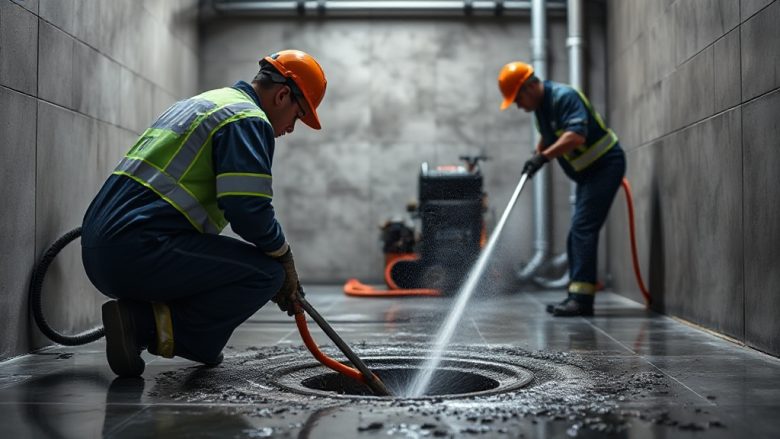
Hydrojetting uses high-pressure water directed through a specialized nozzle to scour the inside of the pipe, removing grease, scale, sediment and roots rather than simply poking a hole through them. This is the option that addresses the cause of the blockage, not just the symptom, which is why it is the standard approach for recurring backups and main sewer lines.
A professional team also inspects before and after the work, so you learn whether the pipe is intact or whether a crack, root intrusion or sagging section is the real reason the drain keeps failing. That diagnostic step is what separates a lasting repair from another temporary fix. For a desentupidora em Piraquara PR, the service typically includes clearing the line, confirming flow and advising on prevention so the same problem does not return next season.
The obvious downside is cost. A professional call-out is more expensive than a plunger or a bottle of cleaner, and it is not the right choice for a single, mild clog you can clear in minutes. But when a blockage is deep, recurring or affecting the whole property, the cheaper options often add up to more money and more disruption than one proper visit.
A Side-by-Side Look at the Trade-Offs
| Option | Best for | Main limitation | Relative cost |
|---|---|---|---|
| Plunger | Soft clogs near the drain mouth | Cannot reach deep blockages | Very low |
| Chemical cleaner | Mild organic buildup in sound pipes | Harsh on pipes, partial clearing | Low |
| Hand auger | Hair and soft clogs a few meters in | Physically demanding, limited reach | Moderate |
| Hydrojetting | Recurring, deep or main-line blockages | Higher upfront cost | High |
How to Decide Which Option Fits Your Blockage
Start with the pattern, not the price. If one fixture drains slowly and the clog is recent, a plunger or a hand auger is a reasonable first attempt, and a mild chemical cleaner is acceptable if the pipes are in good condition. If water backs up in several fixtures, if the drain gurgles, or if the same line has blocked before, the problem is deeper than any manual tool can reach.
Age and material of the plumbing matter too. Older properties with cast iron or corroded pipes are poor candidates for aggressive chemicals and for forceful manual augers, because the risk of causing a leak is real. In those cases, paying for a professional assessment is cheaper than repairing a burst pipe later.
The honest conclusion for a cost-conscious resident is this: try the cheap fix once, with realistic expectations, and stop as soon as it clearly is not working. Repeating the same failed method is where DIY stops saving money. When the blockage returns, spreads or resists every tool you own, the professional route is no longer the expensive option — it is the one that ends the cycle.